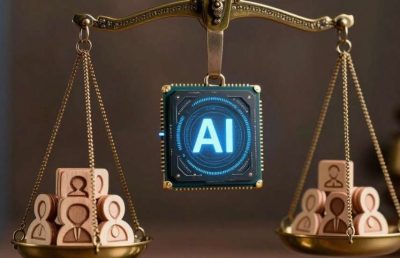




Short Answer: Successful AI integration in recruitment treats the technology as a collaborative tool to automate information retrieval and surface patterns, while keeping human judgment central to final decision-making. High-performing talent acquisition teams design clear governance protocols, perform bias audits, and redefine recruiter roles to focus on candidate relationships, candidate context, and strategic alignment.
Introduction
Recruitment has moved past the point where AI is experimental and human judgment is unquestioned. The differentiator is no longer how much technology is deployed, but how deliberately decision making is shared between humans and machines.
The strongest hiring teams are treating this collaboration as a design problem rather than a tooling choice. Poorly integrated AI introduces noise, false confidence, or detachment from accountability. Thoughtfully integrated, it sharpens judgment, reduces inconsistency, and improves the quality of decisions that are hardest to make under pressure.
The question facing organizations now is not whether AI belongs in recruitment, but where human judgment must remain central. How responsibility is positioned will determine whether AI amplifies decision quality or quietly erodes it.
AI Has Changed the Information Landscape, Not the Decision Obligation
AI has dramatically increased the volume and granularity of hiring signals available to leaders. Funnel analytics, candidate behavior patterns, and performance correlations are now easier to surface than before.
What has not changed is who owns the decision. Hiring outcomes still carry organizational consequences that cannot be delegated to a system. The presence of more data does not remove ambiguity. It often exposes it.
Effective collaboration begins with a clear boundary:
- AI surfaces patterns and inconsistencies
- Humans interpret relevance and risk
- Leaders remain accountable for outcomes
Organizations that blur this boundary tend to either overrule data reflexively or defer to it without sufficient scrutiny.
Where AI Adds Real Value in Recruitment
AI is most effective when applied to areas where humans are prone to inconsistency or cognitive bias. It performs well at revealing trends across time and scale that individuals struggle to hold in mind.
In practice, AI adds value by:
- Highlighting signal drift across interviewers
- Identifying stages where candidates disengage
- Surfacing correlation between hiring decisions and downstream outcomes
- Reducing reliance on anecdotal memory
These insights create a stronger foundation for human judgment. They do not remove the need for it.
Human Judgment Becomes More, Not Less, Important
As AI becomes more embedded, human judgment increases in importance rather than diminishing. Leaders must decide which signals matter, which tradeoffs are acceptable, and when context overrides pattern.
Strong human contribution shows up in moments where data is ambiguous or conflicting. It also shows up in ethical considerations, cultural alignment, and leadership potential, where over quantification introduces risk.
Organizations that collaborate well between AI and humans tend to:
- Train leaders to interpret data, not just receive it
- Encourage challenge of AI outputs when context demands
- Make decision logic explicit rather than implicit
- Preserve accountability at senior levels
Human judgment is no longer about instinct alone. It is about informed interpretation.
Collaboration Breaks Down When AI Is Positioned as Authority
One of the most common collaboration failures occurs when AI is positioned as an authority rather than an input. This often happens subtly, through language and process design.
When AI outputs are treated as verdicts, recruiters disengage from critical thinking. When leaders defer to scores or rankings without interrogation, accountability weakens.
Warning signs of poor collaboration include:
- Decisions justified primarily by algorithmic output
- Reduced willingness to challenge AI recommendations
- Overconfidence in perceived objectivity
- Lack of ownership when outcomes disappoint
Healthy collaboration requires reinforcing that AI supports decisions but does not own them.
Recruiter Roles Are Being Redefined by Collaboration
AI is changing the recruiter role, but not by removing it. Recruiters are increasingly expected to act as interpreters and decision partners rather than process coordinators.
This shift favors recruiters who can:
- Translate data into hiring insight
- Facilitate evidence based hiring conversations
- Challenge leaders constructively
- Balance speed with signal quality
Organizations that invest in this evolution see better outcomes than those that treat AI as a headcount substitute.
Ethics and Trust Sit at the Center of Collaboration
Collaboration between AI and humans raises ethical considerations that cannot be addressed through tooling alone. Trust in hiring decisions depends on transparency and fairness.
Leaders must be clear about:
- Which data is used and why
- How bias is monitored and addressed
- Where human override is appropriate
- Who is accountable when decisions fail
Trust is built when candidates and internal stakeholders understand that AI informs decisions without obscuring responsibility.
Designing for Collaboration Is a Leadership Choice
AI and human collaboration does not emerge organically. It must be designed, reinforced, and governed.
Organizations that succeed make intentional choices about:
- Where AI enters the hiring process
- Who reviews and interprets outputs
- How decisions are documented
- How learning feeds back into the system
Collaboration is not a feature of the tool. It is a feature of leadership maturity.
Frequently Asked Questions (FAQs)
1. Does AI reduce bias in recruitment?
AI can help surface patterns and inconsistencies, but bias reduction depends on how humans interpret and act on those insights.
2. Should AI influence final hiring decisions?
AI should inform final decisions, not make them. Accountability must remain with human leaders.
3. How does AI change the recruiter role?
Recruiters increasingly act as interpreters of data and facilitators of better decision making rather than process administrators.
4. What is the biggest risk in AI and human collaboration?
Positioning AI as an authority rather than an input, which weakens judgment and accountability.
Conclusion
AI and human collaboration in recruitment is now a defining capability. Organizations that approach it thoughtfully gain consistency, clarity, and stronger hiring outcomes. Those that approach it passively risk confusion and misplaced confidence.
The most effective hiring decisions emerge when technology sharpens insight and humans retain responsibility. Collaboration works when AI expands visibility and leaders apply judgment.
In recruitment, as in leadership, the value of AI is not in replacing people. It is in helping them decide better when it matters most.