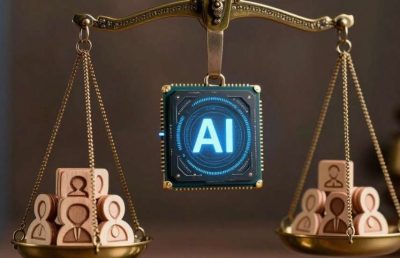




Short Answer: While AI tools excel at processing vast datasets and detecting candidate patterns, they lack the context, empathy, and systemic understanding required for long-term hiring success. Human judgment is indispensable for interpreting ambiguous signals, evaluating leadership potential, weighing organizational tradeoffs, and taking final accountability. A balanced hiring process uses AI for optimization while relying on human decisions for critical selection.
Introduction
AI has become deeply embedded in modern hiring workflows. From sourcing and screening to scheduling and assessment, automated systems now influence how candidates are discovered and evaluated. As adoption has increased, so has a quieter question inside leadership teams. Where does human judgment still belong.
The risk is not that AI is incapable. It is that organizations misplace confidence and allow tools to drift from support into authority. When this happens, hiring decisions become faster but not necessarily better. Subtle context is lost, accountability blurs, and trust erodes.
Understanding the role of human judgment in AI hiring is not a philosophical exercise. It is a practical leadership issue that determines whether technology improves hiring outcomes or simply accelerates existing weaknesses.
AI Excels at Pattern Detection, Not Meaning
AI systems are exceptionally good at identifying patterns across large data sets. They surface correlations, rank signals, and flag anomalies faster than any human team could. This strength makes them valuable in recruitment, where volume and repetition are common.
What AI cannot do is interpret meaning. It does not understand intent, nuance, or consequence. It cannot weigh tradeoffs that exist outside the data it sees.
Human judgment fills this gap. Leaders and hiring managers contextualize signals, assess relevance, and decide which patterns matter given the organization’s goals and constraints. Without this interpretation, pattern detection becomes noise rather than insight.
Judgment Determines What Data Matters
Every AI hiring system reflects choices about what data is captured and how it is weighted. These choices are rarely neutral. They encode assumptions about what success looks like and which signals predict it.
Human judgment is required at this foundational level. Leaders must decide which attributes deserve attention and which should be excluded. They must question whether historical data reflects desired outcomes or inherited bias.
Organizations that abdicate this responsibility often discover that AI reinforces past decisions rather than supporting better future ones.
Context Cannot Be Automated
Hiring decisions are shaped by context. Team dynamics, leadership maturity, organizational change, and timing all influence what makes a candidate right or wrong in a given moment.
AI systems operate without situational awareness. They evaluate candidates against static criteria or historical patterns. Human judgment adapts those criteria to current reality.
This adaptability matters most in senior or specialized roles where success depends on alignment with evolving conditions rather than fixed requirements.
Accountability Lives With Humans, Not Systems
One of the most overlooked risks in AI hiring is diffusion of accountability. When decisions are influenced by automated recommendations, responsibility can quietly shift from people to tools.
Effective organizations make the opposite choice. They use AI to inform decisions, but they retain clear human ownership of outcomes. When a hire succeeds or fails, leaders can explain why the decision was made and what tradeoffs were considered.
This accountability reinforces ethical responsibility and maintains trust internally and externally. AI does not absolve leaders of judgment. It demands better judgment.
Human Judgment Interprets Tradeoffs
Hiring is rarely about choosing the objectively best candidate. It is about choosing the right candidate given constraints. Tradeoffs between speed and quality, experience and potential, cultural alignment and diversity are inherent.
AI can surface information relevant to these tradeoffs, but it cannot resolve them. Resolution requires values, priorities, and long term perspective.
Human judgment integrates these dimensions. It allows leaders to make conscious choices rather than defaulting to optimized scores.
Overreliance on AI Reduces Learning
When teams accept AI outputs without challenge, learning slows. Decisions feel justified by system logic rather than examined through reflection. Over time, this weakens hiring capability rather than strengthening it.
Human judgment keeps learning active. By questioning recommendations and reviewing outcomes, teams refine their understanding of what works and why.
Organizations that treat AI as a collaborator rather than an authority build stronger hiring muscle. Those that defer to systems risk becoming dependent and brittle.
Bias Detection Requires Human Oversight
AI can help surface bias patterns, but it cannot define fairness on its own. What constitutes bias depends on context, regulation, and organizational values.
Human judgment is essential in reviewing AI driven outcomes, identifying unintended disparities, and deciding how to respond. Ethical hiring requires interpretation and action, not just detection.
Without oversight, biased outcomes can persist quietly under the appearance of objectivity.
Trust in Hiring Is Built Through Explanation
Candidates and stakeholders care about how decisions are made. When AI influences outcomes, the ability to explain decisions becomes more important, not less.
Human judgment provides this explanation. Leaders translate system input into human reasoning. They articulate why certain factors mattered and how decisions were reached.
This transparency builds trust and preserves credibility, especially in high stakes or senior hiring.
Designing for Judgment Is a Leadership Choice
The role human judgment plays in AI hiring is not accidental. It is designed. Leaders decide where AI informs, where humans decide, and how disagreements between the two are resolved.
Strong design includes:
- Clear boundaries between recommendation and decision
- Defined escalation when system outputs conflict with context
- Regular review of outcomes and assumptions
These choices ensure that AI augments rather than displaces judgment.
Frequently Asked Questions (FAQs)
1. Can AI replace human judgment in hiring?
No. AI can support decision making, but judgment is required to interpret context, weigh tradeoffs, and own outcomes.
2. Where is human judgment most critical in AI hiring?
In defining success criteria, interpreting signals, resolving tradeoffs, and making final decisions.
3. Does human judgment introduce more bias than AI?
Both can introduce bias. The key is oversight. Human judgment with awareness and accountability reduces risk more effectively than unchecked automation.
4. How can organizations balance AI and human judgment?
By clearly defining roles, maintaining accountability, and reviewing outcomes regularly to refine both system inputs and human decisions.
Conclusion
The role of human judgment in AI hiring is not diminishing. It is becoming more important. As systems take on more analytical work, the quality of interpretation and decision making determines whether outcomes improve.
Organizations that succeed with AI treat it as a decision support capability, not a decision maker. They invest in clarity, accountability, and ethical oversight. They ensure that humans remain responsible for choices that shape people’s careers and organizational culture.
As AI continues to evolve, the advantage will not belong to those who automate the most. It will belong to those who apply human judgment with discipline, humility, and intent where it matters most.