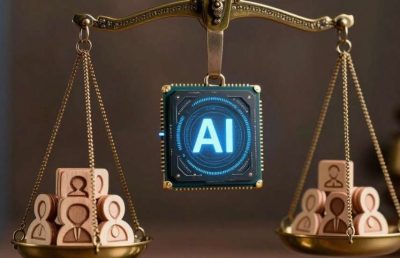




Short Answer: AI-augmented recruitment succeeds when automation handles high-volume operational tasks and highlights hidden talent patterns, while human recruiters focus on candidate relationship building and final selection. Organizations must establish clear problem definitions and robust governance to prevent AI from reinforcing historical bias. The most effective systems use technology to reduce administrative noise, thereby freeing human judgment for high-impact decisions.
Introduction
AI has firmly entered the recruitment function, but results remain uneven. Some organizations report faster hiring and improved consistency. Others see little impact beyond added tools and dashboards. The difference is rarely about the sophistication of the technology itself. It is about how AI is integrated into decision making.
AI augmented recruitment does not replace recruiters or hiring managers. It reshapes where human judgment is applied and where systems provide leverage. When implemented thoughtfully, AI reduces noise, surfaces risk earlier, and improves focus on high value work. When adopted superficially, it adds complexity without clarity.
Understanding what actually works in AI augmented recruitment requires moving beyond feature lists and examining how hiring decisions are supported in practice.
Augmentation Works Best When the Problem Is Clear
AI delivers the most value when applied to well defined problems. Organizations that struggle often deploy AI broadly without clarity on what they are trying to improve. As a result, systems generate insight without impact.
Effective AI augmentation starts with identifying friction points in the hiring process. These may include inconsistent screening, delayed feedback, or poor visibility into pipeline health. AI is then used to address specific constraints rather than to overhaul the entire system.
Clear problem definition ensures that AI supports decision quality rather than becoming an additional layer of reporting.
AI Is Most Effective at Reducing Operational Noise
One of the most consistent benefits of AI augmented recruitment is noise reduction. Recruitment generates large volumes of data, much of it low signal. AI helps filter and prioritize information so humans can focus where judgment matters most.
This typically shows up in:
- Prioritization of candidate pools based on defined criteria
- Early identification of process bottlenecks
- Detection of inconsistent evaluation patterns
By reducing operational clutter, AI improves the signal to noise ratio rather than attempting to automate judgment itself.
Structured Inputs Drive Better AI Outputs
AI performance is tightly linked to input quality. Unstructured feedback, vague role definitions, and inconsistent evaluation criteria limit the value of any system, regardless of capability.
Organizations that see meaningful results invest first in structure. They define what good looks like for a role, standardize feedback dimensions, and ensure that data captured reflects decision intent.
This discipline benefits hiring even without AI. With AI, it becomes a multiplier. Poor inputs produce misleading outputs. Strong inputs enable useful insight.
Human Judgment Must Remain Central
AI augmented recruitment works when boundaries are clear. Systems surface patterns, rank signals, and highlight risk. Humans interpret context, make tradeoffs, and own decisions.
Problems arise when AI recommendations are treated as conclusions rather than inputs. Overreliance erodes accountability and introduces blind spots.
Effective augmentation is characterized by:
- Clear rules on where AI informs decisions
- Explicit human ownership of final calls
- Willingness to override system recommendations when context demands it
This balance preserves trust and ensures that AI enhances rather than replaces judgment.
Timing Matters More Than Automation Depth
Organizations often focus on how much of the process AI can automate. In practice, when AI is applied matters more than how extensively.
AI adds the most value early, before decisions harden. Early signal around candidate quality, role clarity, or process drag allows teams to adjust course while options remain open.
Late stage automation, by contrast, often reinforces decisions that have already been made. It improves efficiency but rarely improves outcomes.
Transparency Builds Adoption and Trust
Recruiters and hiring managers are more likely to engage with AI systems they understand. Black box recommendations generate skepticism and passive resistance.
Transparency does not require exposing algorithms. It requires explaining what the system considers and how outputs should be used.
Organizations that succeed invest in education and shared language. They treat AI as a collaborator rather than an authority. This framing accelerates adoption and improves usage quality.
AI Reveals Process Weaknesses Quickly
One underappreciated benefit of AI augmentation is diagnostic. AI surfaces inconsistencies that were previously hidden. Role ambiguity, misaligned interviewers, and biased evaluation patterns become visible.
This can be uncomfortable. Organizations unprepared to act on these insights often disengage from the system rather than addressing root causes.
Those that benefit most treat AI feedback as an opportunity to improve hiring discipline. Over time, this leads to stronger processes even as tools evolve.
Governance Determines Long Term Value
AI augmented recruitment introduces governance requirements that cannot be ignored. Decisions influenced by data require oversight, review, and adjustment.
Clear governance defines acceptable use, audit cadence, and escalation paths when system outputs conflict with human judgment. Without this structure, organizations risk inconsistency and loss of trust.
Governance is not a constraint on innovation. It is what allows AI use to scale responsibly.
Frequently Asked Questions (FAQs)
1. What does AI augmented recruitment actually mean?
It means using AI to support and enhance human decision making rather than automating hiring end to end.
2. Where does AI add the most value in recruitment?
In reducing operational noise, surfacing early risk, and improving visibility into patterns that humans struggle to track at scale.
3. Why do some AI recruitment tools fail to deliver impact?
Because they are deployed without clear problem definition, structured inputs, or governance around use.
4. Does AI reduce bias in hiring decisions?
It can help surface bias, but only with oversight. Without careful design and review, AI can reinforce existing patterns.
Conclusion
AI augmented recruitment works when it is treated as a decision support capability rather than a shortcut to automation. Its value lies in improving clarity, timing, and focus within the hiring process.
Organizations that see results invest in structure, maintain human ownership, and apply AI where it meaningfully changes decisions. Those that chase automation without discipline often add complexity without benefit.
As AI continues to evolve, the differentiator will not be who adopts it fastest, but who integrates it most thoughtfully into how hiring decisions are made.