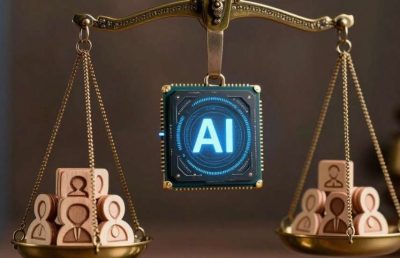




Short Answer: Artificial intelligence in recruitment is most effective when used as an analytical and workflow optimization layer, rather than a decision-maker. While AI excels at streamlining workflows, resume parsing, and pattern recognition, human judgment remains critical for evaluation and senior hiring. Clean data and strong governance are essential to mitigate bias.
Introduction
By late 2023, artificial intelligence had become impossible to ignore in recruitment conversations. Vendor messaging intensified, product roadmaps shifted, and leadership teams were under pressure to “do something with AI” in hiring. At the same time, skepticism grew. For every credible application, there were exaggerated claims about automation replacing judgment, recruiters becoming obsolete, and hiring decisions being fully machine-led.
For founders, CTOs, and Heads of Talent, the challenge was not whether AI would influence recruitment. That question had already been answered. The real challenge was separating practical value from noise.
AI in recruitment is neither a silver bullet nor a passing trend. Its impact depends entirely on where it is applied, how it is governed, and what problems it is actually solving. Understanding that distinction became critical in 2023 as organizations moved from experimentation to expectation.
Why AI Gained So Much Attention in Hiring
The surge of interest in AI-driven recruitment did not happen in isolation. It emerged at the intersection of several pressures that defined the hiring landscape in 2023.
Organizations were dealing with constrained budgets, smaller recruiting teams, and higher expectations around efficiency. At the same time, candidate volumes fluctuated sharply due to layoffs, creating operational strain.
AI promised relief across multiple dimensions:
- Faster processing of large candidate pools
- Reduced manual screening and coordination work
- Better use of hiring data that already existed
- Consistency in early-stage evaluation
These promises were compelling, particularly for lean talent teams expected to do more with less. However, attention quickly outpaced understanding.
What AI Is Actually Doing Well in Recruitment
Despite the noise, several AI applications proved genuinely useful when deployed with discipline.
One clear area of value was workflow efficiency. AI-driven tools improved scheduling, candidate communication, and resume parsing. These applications reduced administrative burden without altering hiring decisions themselves.
Another area was pattern recognition within structured data. When used responsibly, AI helped surface trends such as:
- Drop-off points in interview funnels
- Time-to-hire bottlenecks by role or team
- Historical sourcing effectiveness
In these cases, AI acted as an analytical layer, not a decision-maker. It supported better human judgment rather than replacing it.
Importantly, these gains were incremental, not transformational. Teams that expected immediate step-change improvements were often disappointed. Those that treated AI as infrastructure saw steadier returns.
Where the Noise Dominates
Much of the skepticism around AI in recruitment came from overreach.
One common issue was inflated claims around candidate assessment. Tools promising to evaluate culture fit, leadership potential, or motivation through automated analysis often lacked transparency and validation.
Another issue was the assumption that AI could remove bias entirely. In reality, AI systems reflect the data they are trained on. Without careful oversight, they risked reinforcing existing hiring patterns rather than improving fairness.
Several warning signs became clear throughout 2023:
- Black-box scoring without explainability
- Over-reliance on historical hiring data
- Automation applied to subjective decision points
In these scenarios, AI introduced risk rather than reducing it.
The Human Judgment Boundary
One of the most important lessons from 2023 was the need to define where AI should stop.
Recruitment is not purely a data problem. Senior hiring decisions, in particular, involve trade-offs, context, and future-oriented judgment that cannot be fully codified.
Effective organizations drew clear boundaries:
- AI supports sourcing, coordination, and insight
- Humans retain ownership of evaluation and decision-making
- Final accountability always rests with leadership
This clarity prevented AI from becoming a proxy decision-maker and kept responsibility where it belonged.
Data Quality Matters More Than Algorithms
Another reality became increasingly evident. AI effectiveness in recruitment is constrained by data quality, not algorithm sophistication.
Many organizations discovered that their hiring data was fragmented, inconsistent, or incomplete. Job definitions varied, interview feedback lacked structure, and success metrics were unclear.
Without strong foundations, AI outputs added limited value. In contrast, companies that invested in clean role definitions, consistent evaluation criteria, and disciplined feedback loops were able to extract far more insight from even simple AI tools.
This shifted the conversation from “Which AI tool should we use?” to “Are we ready to use AI responsibly?”
How Leaders Approached AI Adoption in 2023
The most effective AI adoption strategies shared several characteristics.
Leaders started with specific problems rather than broad ambition. They asked where recruiters were losing time, where candidates were experiencing friction, and where data visibility was weakest.
They also treated AI as an augmentation layer:
- Automating repetitive tasks first
- Introducing analytics before prediction
- Piloting tools with clear success criteria
Crucially, governance was established early. Legal, talent, and technical stakeholders aligned on acceptable use, bias mitigation, and transparency expectations.
This approach slowed adoption initially but reduced risk over time.
Implications for the Future of Hiring
The AI conversation in recruitment is moving from hype to accountability.
As expectations mature, organizations will be judged less on whether they use AI and more on how they use it. Poorly governed automation will become a liability. Thoughtful, restrained application will become a competitive advantage.
For talent leaders, this means developing literacy rather than chasing novelty. Understanding what AI can and cannot do is now part of strategic hiring competence.
For executives, it reinforces a broader truth. Technology does not replace judgment. It amplifies it, for better or worse.
Frequently Asked Questions (FAQs)
1. Is AI replacing recruiters in hiring?
No. AI is primarily reducing administrative workload and improving insight. Human judgment remains central to evaluation and decision-making.
2. Can AI eliminate bias from recruitment?
AI can help identify patterns, but it cannot eliminate bias on its own. Without careful oversight, it may reinforce existing biases.
3. Where should companies start with AI in recruitment?
Start with workflow efficiency and data visibility. Automate repetitive tasks first and build strong governance before expanding use cases.
Conclusion
AI in recruitment is neither the revolution some predicted nor the distraction others feared. In 2023, it revealed itself as a toolset with clear strengths, real limitations, and significant responsibility attached.
The signal lies in efficiency, insight, and support. The noise lies in over-automation, opaque decision-making, and exaggerated claims.
Organizations that treat AI as a means to strengthen human judgment will benefit. Those that attempt to outsource responsibility to algorithms will encounter new forms of risk.
Understanding that distinction is what separates thoughtful adoption from costly experimentation.